

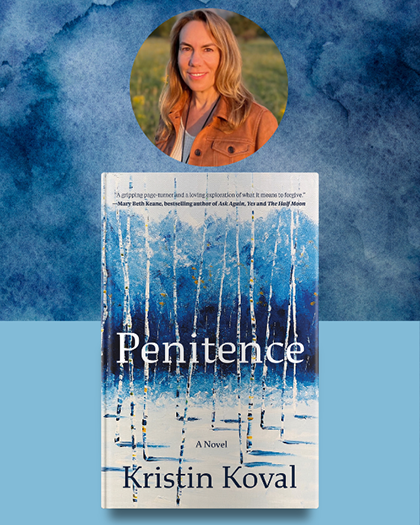
I wrote Penitence to explore the concepts of guilt, forgiveness, and redemption, and centered the novel on the aftermath of 13-year-old Nora Sheehan’s killing her brother, Nico, who had terminal Huntington’s disease. The novel places Nora’s parents in both the easiest and the hardest possible position to forgive, but all three generations of Sheehans—and the intertwined Dumont family members, lawyers who are defending Nora in court—are flawed and struggling with guilt about their own life choices.
Writing about characters searching for redemption and forgiveness after hurting others was a particularly fraught subject. In life, some people have difficulty taking responsibility for their own actions. Others struggle with the concept of self-forgiveness. Those who are hurt might struggle to feel empathy, show mercy, or forgive. The challenge in writing Penitence was conveying the emotional truth of that messiness without losing readers.
Readers have responded to Penitence in ways I couldn’t have anticipated. Many have told me they connected with the characters and felt that mix of empathy, mercy, and forgiveness, and that it helped them understand how they might search for redemption after their own moral failures, or how they might find forgiveness for others who harmed them. That connection is what I hoped for. Redemption in Penitence (and in life) is not easy. It’s partial, hard to find, and sometimes too late. But it is real. Writing it sent me searching through the work of other novelists who grappled with the same concepts, and the books below are the ones that have stayed with me.

Signal Fires by Dani Shapiro
Dani Shapiro’s Signal Fires opens on a summer night in the suburbs in 1985: Three teenagers have been drinking; one gets behind the wheel, and a girl is killed. To protect her younger brother Theo, who was driving, Sarah Wilf falsely tells police that she was at the wheel. That lie—and the family’s decision to close ranks around it—becomes the novel’s moral tipping point, a secret so dangerous, as Shapiro puts it, it can never be spoken. Signal Fires traces the creeping damage that one covered-up act inflicts on Theo, Sarah, their father Ben, and eventually their neighbors the Shenkmans, whose son Waldo—a brilliant, cosmos-obsessed boy—forms an unlikely friendship with the elderly and grief-shadowed Dr. Ben Wilf decades later. The insight into redemption that stayed with me is that the truth, even when it arrives too late to undo the harm, still matters because without naming what happened—and without acknowledging responsibility—redemption will always be unattainable.
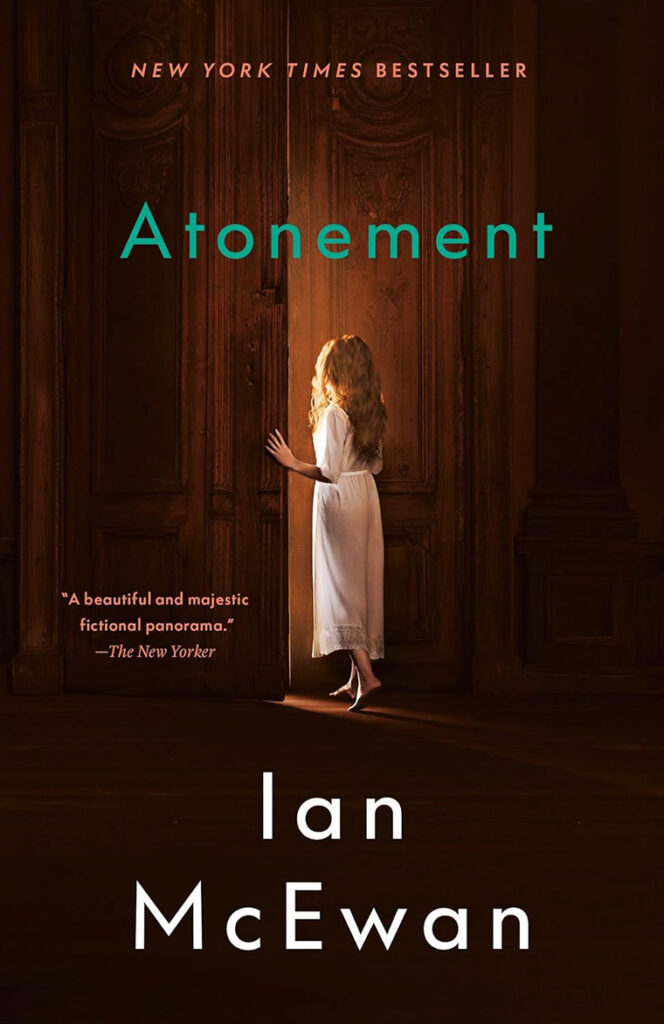
Atonement by Ian McEwan
It would be impossible to write about redemption in fiction without referencing Ian McEwan’s Atonement, which asks whether a person can ever truly atone for a lie that destroyed other lives (spoiler: the answer is not an easy one). Thirteen-year-old Briony falsely accuses her sister Cecilia’s lover of rape, sending him to prison and then to war, where he dies during the Dunkirk evacuation. Cecilia, estranged from her family, dies in a London bombing raid. The two never see each other, or Briony, again. McEwan’s devastating final twist reveals that Briony—now an elderly novelist facing dementia—has spent decades writing a fictionalized account that reunites the lovers, a version of events she knows to be untrue but cannot bear to leave unwritten. The question the novel leaves hanging is whether Briony’s fiction constitutes genuine atonement or one final act of self-serving imagination. I think about that ending constantly because it reminds me that life does not always offer us the redemption and forgiveness we need or hope for, no matter how sorry we are.
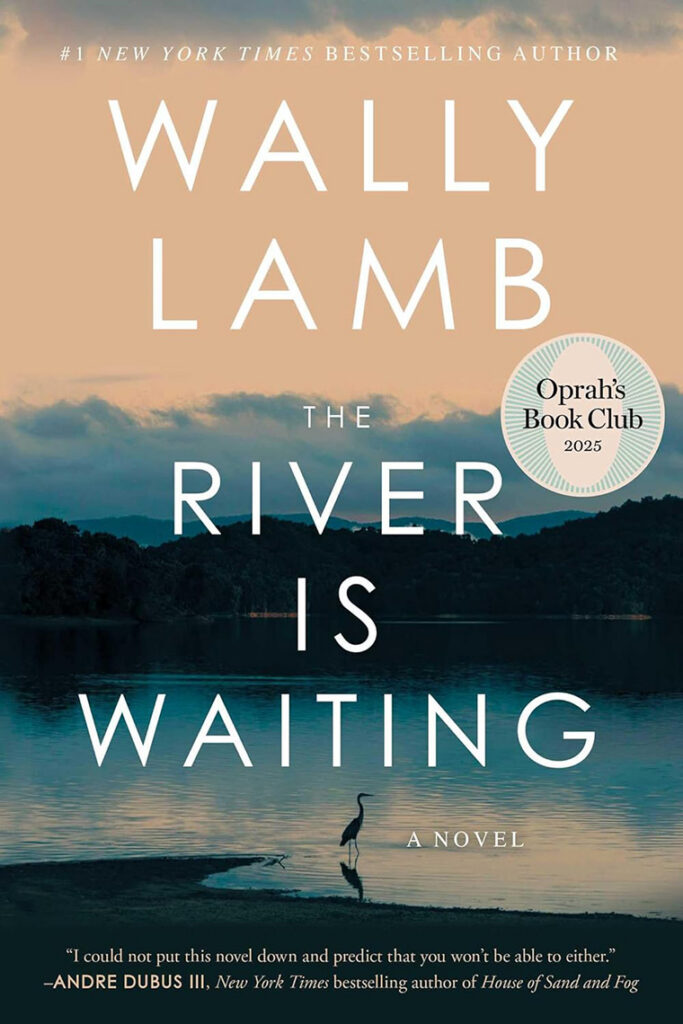
The River Is Waiting by Wally Lamb
Wally Lamb’s 2025 Oprah’s Book Club selection opens with a harrowing scene: Corby Ledbetter, a stay-at-home father struggling with a secret addiction to pills and alcohol, backs his car over his two-year-old son Niko in the driveway. The novel’s central question—can a man who caused the death of his own child ever find forgiveness, from others or from himself?—also doesn’t have an easy answer. Sentenced to three years in prison, Corby is an unsympathetic narrator, his denial and self-pity almost unbearable. But what makes the novel fascinating is watching Corby gradually, imperfectly earn a measure of moral competence—confessing his intoxication to his wife and the police, protecting a vulnerable young inmate named Solomon, finding his way back to himself through art. The River Is Waiting understands that redemption cannot be wished into existence; it must be built, slowly and painfully, from the wreckage of what you’ve done.
What these three books share, beyond their preoccupation with guilt and what it means to be human and to have done wrong, is an honest look at how challenging it can be to find redemption. They propose that redemption—if it comes at all—requires something active and costly: a willingness to acknowledge and accept what we’ve done, to live with the guilt of what cannot be undone, and to act, however imperfectly, in the direction of repair. Then, and only then, might redemption find us.
By Kristin Koval
Kristin Koval is the author of Penitence.
Kristin Koval is a former lawyer who always wanted to be a writer but initially wandered down other paths. Penitence is her debut novel and was a Barnes & Noble Discover Pick, a Book of the Month Pick, an Indie Next Pick, an Apple Books Staff Pick, an Apple Audiobooks Must Listen, a People Magazine Book of the Week, and a Goodreads Most Anticipated Pick and Hottest Debut Selection. She lives in Boulder, Colorado and Park City, Utah with her husband, two sons and two Great Danes.