On May 25, 1977, a little movie called Star Wars by George Lucas was released in a small number of theaters in the United States — and it soon went on to change the world.
It’s hard to imagine that moviegoers seeing this epic space opera for the first time in 1977 could have anticipated the seismic cultural impact to come. What began as a limited release turned surprise summer blockbuster has since evolved into an ever-expanding cinematic universe spanning theme parks, comic books, films, TV, and streaming series.
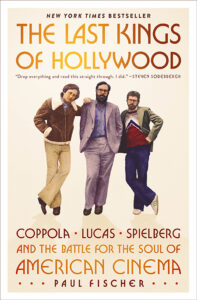
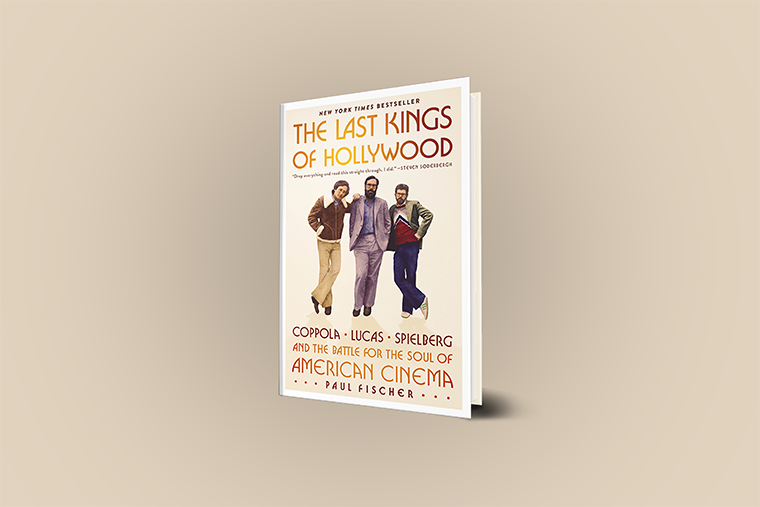
In his new book The Last Kings of Hollywood, author Paul Fischer tells the stunning inside story of how a young George Lucas — along with fellow visionary filmmakers Steven Spielberg and Francis Ford Coppola — revolutionized American cinema in the 1970s and ’80s with films like Star Wars, Jaws, The Godfather, and more. Packed with behind-the-scenes Hollywood anecdotes, Fischer’s deeply researched chronicle is a must-read for cinephiles, Star Wars geeks, and anyone intrigued by movie history.
In fact, there were so many fascinating Star Wars tidbits packed inside The Last Kings of Hollywood that we had to share a few of our favorites — like, for example, that Luke Skywalker was originally named Luke Starkiller!
Read on for more Star Wars facts we found in Fischer’s book and other sources.
1. The Star Wars universe draws inspiration from Kurosawa, Catholicism, and Flash Gordon.
From war history to pulp fiction to comic books to fairy tales, George Lucas drew on an eclectic mix of cultural, historical, religious, and artistic ideas when writing Star Wars.
One inspiration was the Japanese New Wave director Akira Kurosawa, whom George Lucas particularly admired. From Kurosawa’s work, Lucas borrowed Eastern cultural references and philosophies that inspired much of his creation of the Jedi resistance. As Fischer notes in his book, “George called the warrior-monks who worked with the resistance the ‘Jedi,’ from the Japanese jidaigeki, meaning ‘period drama,’ a genre in which his idol Akira Kurosawa had worked frequently. He decided that Eastern, Buddhist principles would govern the monks’ philosophy.” He then blended this Eastern influence with Western Catholic traditions. The Jedi mantra “May the Force be with you” is rhythmically adapted from the “May peace be with you” of Catholic Mass.
Lucas’s version of space was similarly a remix of science fiction and real-life influences. “Outer space as he described it had the laser weapons of Flash Gordon, the spice mines and moisture farms of Frank Herbert’s Dune, and starship scuffles modelled after World War II’s Battle of Britain” .
2. Chewbacca was based on Lucas’s pet dog, Indiana.
Lucas’s world-building drew widely from cultural influences, but he wasn’t above throwing in some personal Easter eggs as well. For instance, he was inspired by his own dog, Indiana, “a giant, scruffy Alaskan Malamute” , who liked to ride in the passenger seat of his car wherever Lucas went. Both Indiana’s devotion and his lovably disheveled appearance inspired the character of Chewbacca, Han Solo’s stalwart copilot. He then drew the name “Chewbacca” from sobaka, the Russian word for dog.
The name Luke Skywalker (aka Luke Starkiller) also stems from George Lucas’s life. Luke, a shortening of Lucas, was George’s high school nickname.
3. Han and Leia could have turned out very differently.
Every film has its alternate what-if history, and Star Wars is no different.
Originally, Han Solo was written as a “green-skinned Jedi” and positioned as a leading character in the story before Lucas homed in on Luke as his central protagonist. Han Solo then became more of a mentor figure/foil with swagger and a taste for adventure. Even then, this augmented version took some polishing. Lucas originally transformed Solo from the green-skinned Jedi “into a ‘burly-bearded’ pirate, slightly older than Luke, with a taste for ‘gaudy’ and ‘flamboyant’ clothing” .
Casting could also have pushed characters in very different directions. Al Pacino was originally offered the role of Han Solo because the studio was looking for a big name to draw in audiences. Pacino turned it down because, apparently, he didn’t understand the script! A 13-year-old Jodie Foster was originally considered for Princess Leia, but she was already under contract for Disney’s Freaky Friday, and the shooting schedules overlapped.
Even the light sabers could have turned out differently. Originally, Lucas wanted Skywalker’s lightsaber to glow red and Vader’s to glow blue, but others thought it would make more sense for red to be associated with the dark side.
4. Yoda was almost played by a trained monkey.
Animals can make for tricky costars. The original bantha, a mystical animal on the desert planet Tatooine that’s akin to a woolly mammoth, was played by an elephant named Mardji, who was borrowed from Marine World Africa USA in Redwood City, California. Mardji, however, had an aversion to the bantha costume. She kept throwing it off during filming and had to be fed apples in between takes to keep her happy and focused.
Fortunately, this same fate didn’t befall Yoda. Originally, production considered having a trained monkey play the sage mentor. But an animal expert on set who had previously worked on 2001: A Space Odyssey suggested that a monkey would likely keep throwing off its costume, much like Mardji. Instead, they took the far better approach of asking Jim Henson to create the now-iconic puppet version.
5. The first Star Wars movie once had a very different title.

In its original 1977 run, Lucas’s space opera was known simply as Star Wars. Today, fans know it by its full name, Star Wars Episode IV: A New Hope. That subtitle was added for its 1981 theatrical rerelease. But did you know that the first Star Wars movie once had a far grander title? Fischer notes that it was originally called (deep breath): The Adventures of Luke Starkiller, as Taken from the Journal of the Whills, Saga 1 of the Star Wars.
6. Harrison Ford came up with Han Solo’s most iconic line…
…and George Lucas hated it! In the original script of The Empire Strikes Back, Han Solo says to Leia after she tells him she loves him, “Just remember that, ’cause I’ll be back.” As Fischer explains in his book, Ford felt it took the suspense out of the moment because it signaled to the audience that Solo would survive and return. Instead, Ford suggested Han Solo’s most memorable line, responding to Leia’s confession of love with the simple: “I know.”
At first, Lucas disliked the change and begrudgingly kept it in for the first preview. He soon came around, however, once preview audiences expressed their love of the stirring exchange between Han and Leia. Members of the audience even “lined up afterwards to tell him what a wonderful line it was” .
7. Ford also considered not reprising his role as Han Solo.
Harrison Ford was notoriously prickly about his role as Han Solo, and he didn’t even know if he wanted to come back for the sequels. As Fischer explains, Ford didn’t want to sign the three-picture contract because he “didn’t want to be defined by Star Wars or forced to turn down something better because the franchise had dibs on him.” This compelled Lucas to write that uncertainty into the script of The Empire Strikes Back. But rather than just kill off the character, Lucas froze Solo in carbonite, suspending him “somewhere between life and death.” Doing so gave the audience two cliff-hangers and “another reason for the kids to come back for another picture, too” . Win-win.
8. The iconic scrolling text that opens the films is a practical effect — and Brian de Palma played a crucial role in its development.
While the scrolling text that opens each Star Wars film is easy to create with basic editing software today, it took some serious problem-solving in the 1970s!
According to Slash Film, the text was made up of precision-cut yellow letters set against a black paper background, resulting in a physical model roughly two feet wide by six feet long. The camera then moved slowly backward over the model, creating the illusion of moving text.
Fischer notes in The Last Kings of Hollywood that fellow filmmaker Brian de Palma advocated for adding the crawl. He thought it would harken back to “the beginning of every Flash Gordon and Buck Rogers episode” and would also add context to Lucas’s rich and, er, complex space opera. Perhaps Pacino wasn’t the only person a bit confused by the story?
9. The garbage in the Death Star compactor scene was very real and very smelly.
When the main cast gets stuck in the Death Star garbage compactor in A New Hope, the set was full of actual trash submerged in shallow water. Naturally, the smell was awful, and as Yahoo News notes, it left the cast damp and uncomfortable. Peter Mayhew, who played Chewbacca, likely had the worst of it: The smell seeped into his woolly getup and refused to leave, compelling Mayhew to act inside a stinky Chewbacca suit for the rest of the shoot!
10. Small teams were required to bring Jabba the Hutt and Darth Vader to life.
True Star Wars fans know that Darth Vader was too great to be played by a single person. In fact, four men were required to bring the dark lord to the big screen. According to Reader’s Digest, Vader’s physical body was played by bodybuilder David Prowse, his stunts were done by professional fencer Bob Anderson, his voice was provided by the legendary actor James Earl Jones, and his face reveal in Return of the Jedi was played by Sebastian Shaw.
Less well known is the team required to bring Jabba the Hutt to life, a character who first appeared in Return of the Jedi. Like Yoda, Jabba the Hutt was a puppet, albeit a much bigger and more expensive one. Reportedly priced at $500,000, the giant, slug-like villain weighed about a ton and required seven puppeteers to work his body!
11. Return of the Jedi was filmed under a veil of spooky secrecy.
George Lucas was very secretive about his scripts and film shoots, keeping details of his movies under wraps not just from the public but from the production crew and actors. Fischer offers an intriguing glimpse at the subterfuge in his book, noting that Return of the Jedi was filmed as a fake horror film under the name Blue Harvest to maintain secrecy. “On set, the Jedi crew went around wearing baseball caps and T-shirts emblazoned with a fake title for a nonexistent horror film, Blue Harvest, and the call sheets were a roll-call of pseudonyms: Mark Hamill was ‘Martin,’ Carrie Fisher was ‘Caroline,’ Harrison Ford just ‘Harry’” .
Today, original Blue Harvest production caps and shirts are highly collectible. A hat and shirt combo sold on Julien’s Auctions for $896. The tagline on the crew shirt for the fake scary movie? “Horror Beyond Imagination.” Worth it!