Marisa Kashino Shares Her Favorite Anti-Heroes in Fiction

By Marisa Kashino
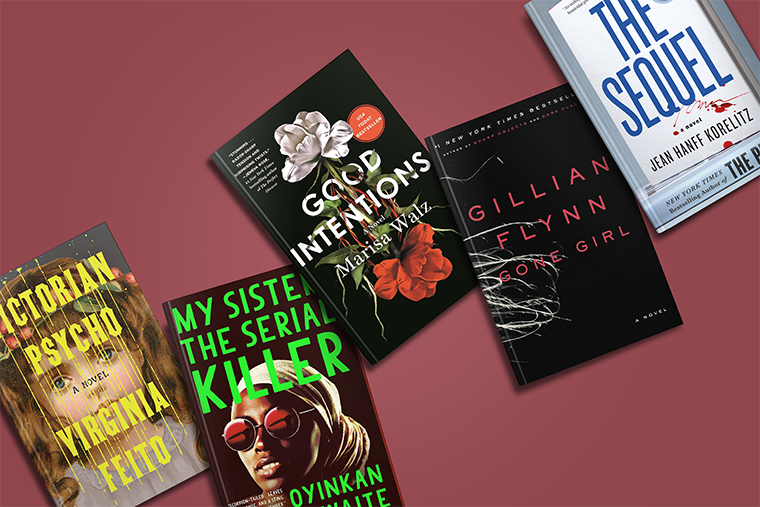
Five thriller novels arranged on a pink background, including "Gone Girl" and "My Sister, the Serial Killer.

Before I wrote a single word of Best Offer Wins, I knew the kind of woman I wanted in the driver’s seat: ruthless, obsessive, unhinged. But also: wickedly funny, unnervingly relatable, even sympathetic. In other words, I wanted Margo Miyake to embody the traits that I love as a reader who’s always gravitated toward antiheroes. To me, the main characters who feel the most authentic—the most human—are the ones who compel you to root for them against all your better instincts. Here are a few of my favorite books with female protagonists who you’ll love to hate and hate to love in equal measure.
Black and white drawing of five books standing upright and stacked together in a row.

Love books?

Sign up for the free Celadon Books newsletter, and get book giveaways, news, and recommendations sent straight to your inbox.

This field is for validation purposes and should be left unchanged.
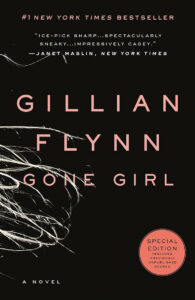
Black cover of "Gone Girl" by Gillian Flynn, with light pink text and strands of hair on the left side.

Gone Girl

By Gillian Flynn

You’ve heard of this little upstart already, right? So, all I’ll say is that Amy Dunne is the obvious standard-bearer of the category.

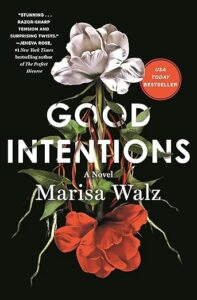
Book cover of "Good Intentions" by Marisa Walz, featuring white and red flowers on a black background.

Good Intentions

By Marisa Walz

On the day her twin sister dies in a car crash, Cady meets a stranger in the hospital waiting room and becomes inexplicably fixated—stalking her, befriending her under false pretenses, and on and on. Told entirely in the second person, this is one of the eeriest, most claustrophic-feeling stories I’ve ever read. I heard the author say in an interview that she wanted readers to feel like Cady was “whispering” the story into their ear. Mission fully, chillingly accomplished.

A striking book cover featuring a woman in sunglasses with the title "my sister, the serial killer" by oyinkan braithwaite.

My Sister the Serial Killer

By Oyinkan Braithwaite

As the title implies, the protagonist here isn’t the worst offender. But Korede is an enabler of the highest order, always on standby with a bucket of bleach and an empty car trunk to help cover up her sister’s dark deeds. As with any good morally gray character, I wanted to reach through the page and shake some sense into her. But thanks to a deftly constructed backstory, I couldn’t help but feel affection for both of these deeply flawed sisters.

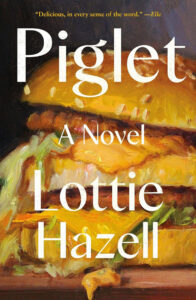
Book cover for "Piglet: A Novel" by Lottie Hazell, featuring a painted cheeseburger in the background.

Piglet

By Lottie Hazell

A ticking time bomb of a book that I read in a single day. Piglet is two weeks from her wedding when her fiancé admits a shocking betrayal that sends her into one of the most vividly rendered psychological spirals I’ve ever encountered in a novel. Even as her antics made me cringe, I was firmly in Piglet’s corner the entire time, hoping against hope that in the end, she’d do the right thing.

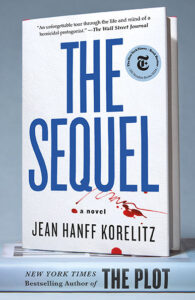
Book cover of "The Sequel" by Jean Hanff Korelitz with blue text and blood spatters on a white background.

The Sequel

By Jean Hanff Korelitz

The protagonist in the first book—Jacob Finch Bonner, a professor who becomes a bestselling novelist after ripping off student work—might be morally gray. But then comes Anna Williams-Bonner, Jacob’s lovely, much wickeder wife. When she takes center stage in The Sequel, it’s a real “hold my beer” moment. As tenacious and clever as Gone Girl’s Amy Dunne, I had no trouble at all cheering Anna on.

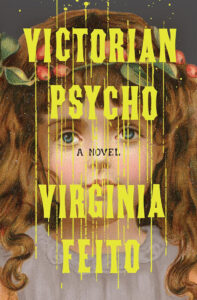
Book cover with a doll’s face and yellow, dripping text reading "Victorian Psycho, A Novel, Virginia Feito.

Victorian Psycho

By Virginia Feito

Winifred Knotty, the new governess at the Pounds family estate, is the babysitter of your sickest, goriest, most depraved nightmares. I read this one by a hotel pool, and while I wouldn’t advise trusting Winifred with your houseplants, let alone your children, she made me laugh so hard I attracted dirty looks from the other sunbathers. If your sense of humor is as twisted as mine, you’ll be sad when this ends (even if you do feel a tad nauseous).

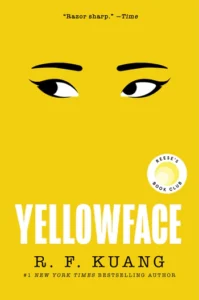
Book cover of "Yellowface" by R. F. Kuang, featuring stylized eyes on a yellow background with Reese's Book Club logo.

Yellowface

By R. F. Kuang

Oh June Heyward, I really can’t stand you! And that’s exactly the point. In her despicable protagonist, Kuang has created the perfect mirror to reflect (and skewer) the dearth of diversity in the publishing industry. Just as frothy and fast-paced as it is smart and provocative, I thought a lot about how I might strike a similar balance while creating Margo and satirizing the housing crisis in Best Offer Wins.

A smiling woman above the book "Best Offer Wins" by Marisa Kashino on a blue and purple background.

By Marisa Kashino

Marisa Kashino was a journalist for 17 years, most recently at The Washington Post. She spent the bulk of her career at Washingtonian magazine, writing long-form features and overseeing the real estate and home design coverage. She grew up near Seattle, graduating from the University of Washington with a degree in journalism and political science. She lives in the DC area with her husband, two dogs, and two cats. Best Offer Wins is her first novel.


Photo Credit: Laura Metzler

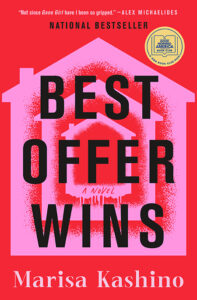
Book cover for "Best Offer Wins" by Marisa Kashino, featuring bold text and a pink house graphic on a vibrant red background, capturing the lively spirit of Best Offer Wins.

Best Offer Wins

By Marisa Kashino

An insanely competitive housing market. A desperate buyer on the edge. In Marisa Kashino’s darkly hilarious debut novel, Best Offer Wins, the white picket fence becomes the ultimate symbol of success—and obsession. How far would you go for the house of your dreams?

Share with your friends

Facebook
Twitter
LinkedIn
Pinterest

Related Articles

A life in the arts is often viewed in stark terms: If you really want to be an artist, you’ll have to choose between chasing your dreams or paying your bills. 
I wrote Penitence to explore the concepts of guilt, forgiveness, and redemption, and centered the novel on the aftermath of 13-year-old Nora Sheehan’s killing her brother, Nico, who had terminal Huntington’s disease. The novel places Nora’s parents in both the easiest and the hardest possible position to forgive, but all three generations of Sheehans—and the intertwined Dumont family members, lawyers who are defending Nora in court—are flawed and struggling with guilt about their own life choices.
Hockey is having an undeniable moment right now, and it started even before Team USA’s dramatic gold medal wins over Canada in both the men’s and women’s divisions in the 2026 Winter Olympics. The intensity, teamwork, and raw emotion of the sport have spilled over into fiction, and stories on the ice seem to be drawing in readers like never before.

Celadon delivered

Subscribe to get articles about writing, adding to your TBR pile, and simply content we feel is worth sharing. And yes, also sign up to be the first to hear about giveaways, our acquisitions, and exclusives!